SpaceX flexes might by operating the Starship, Falcon 9, Falcon Heavy, and Dragon at the same time.
SpaceX operates two orbital Dragons, four rockets, and four launch pads. More than 3300 Starlink satellites were in the air and serving internet to a million customers around the world. Company has contracts with NASA to send astronauts to the moon and land them on the Moon.
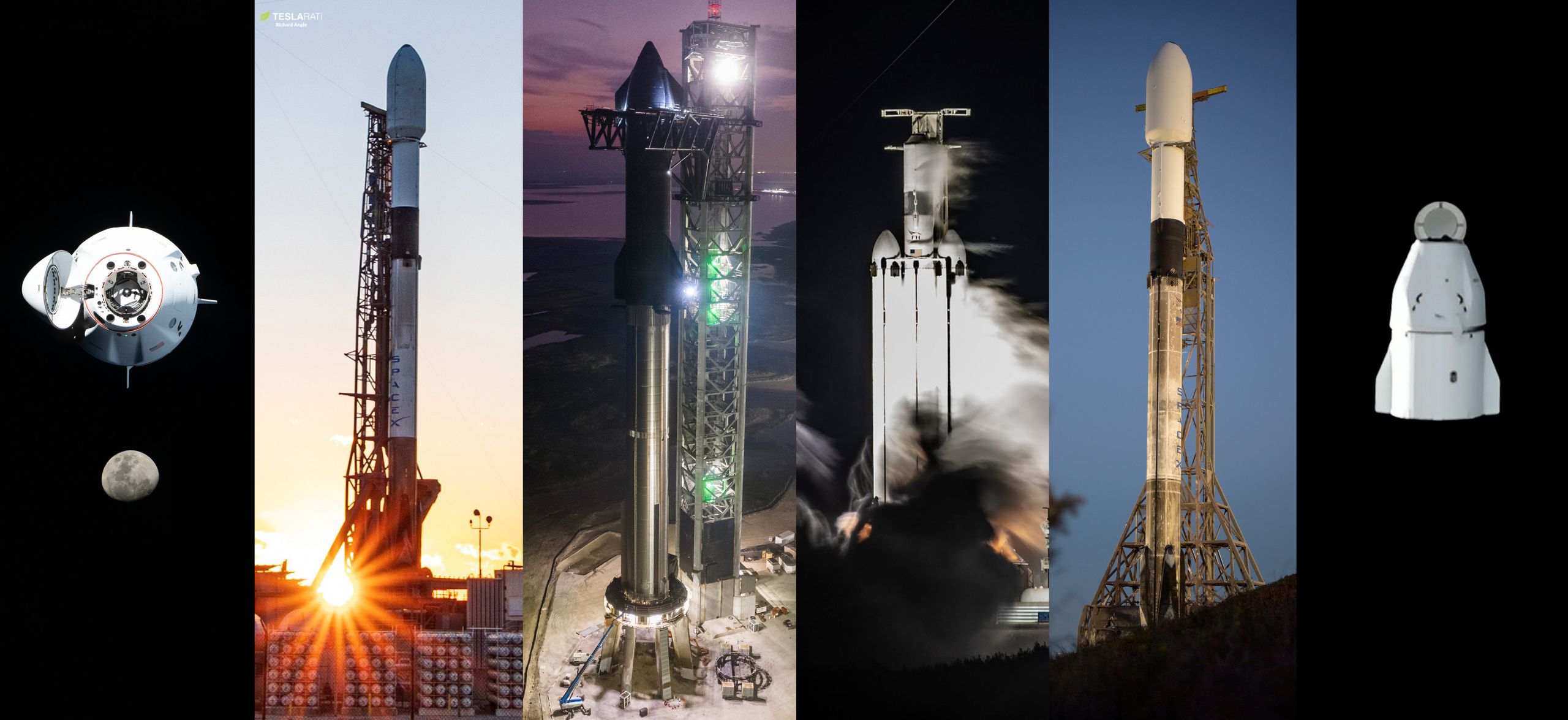
On January 9th, the company demonstrated the breadth of its capabilities by simultaneously operating two orbital Dragons, four rockets, and four launch pads. The spaceships were stacked at the lone South Texas orbital launch pad. In California, a Falcon 9 rocket was used for the upcoming Starlink 2-4 launch, which will carry the company's own internet satellites.
Advertisement
All four orbital launch pads fully loaded with rockets for the first time! https://t.co/EXlB0p5vWN
— Elon Musk (@elonmusk) January 10, 2023
Advertisement
In Florida, both of the Falcon launch pads were occupied. The Kennedy Space Center Pad 39A is where the Falcon Heavy rocket went vertical. There was a second Falcon 9 rocket at the LC-40 pad for the OneWeb satellite launch.
Advertisement
Just 35 minutes after Starlink was delayed, both Falcon 9 rockets were ready to be launched. After leaving the International Space Station, the Cargo Dragon 2 was free to fly in space. The Crew Dragon will remain at the International Space Station until four astronauts return to Earth.
Advertisement
At one point, all four of the company's launch pads had four Orbital-class rockets assembled and vertical at them at the same time. Only the entire Chinese launch industry, private and public, can hold a candle to the breadth and diversity of the launch vehicle operations of a single company. More than 3300 Starlink satellites were in the air and serving internet to a million customers around the world.
Advertisement
On the horizon, the company has contracts with NASA to launch a modified Dragon spaceship to the moon, land astronauts on the Moon with a modified version of Starship, and send private astronauts around the Moon. The construction of a permanent, sustainable human presence on Mars is the ultimate purpose of Starship.
Advertisement
There is a long way to go to achieve those goals. A decade ago, even the company's most optimistic proponent could have dreamed that the company would dominate almost every major segment of modern spaceflight by the early 2020s. They wouldn't have expected NASA to place its trust in Starship, or that SpaceX would beat Boeing to its first astronauts launch. Time will tell where the company will be a decade from now.
Advertisement